Last updated November 18, 2026
New Detached ADU Maintenance Schedule: What to Do and When
Most homeowners assume the clock on their new detached ADU’s warranties starts the day a tenant moves in. It usually doesn’t. Roofing membrane, HVAC equipment, windows, and waterproofing warranties generally run from the date of manufacture or installation, which can be six to twelve months before you hand over the keys. If you wait until something looks wrong to check the paperwork, some of those warranties have already lapsed. This guide lays out a real maintenance calendar for a Henderson ADU: month by month through Year 1, then the Year 3 – 5 window when first-generation finishes start to show their age.
Quick Answer
A new detached ADU needs its own maintenance schedule separate from the main house: roof and caulk inspections before and after Henderson’s summer heat peak and monsoon season, HVAC filter changes every 60 – 90 days in a small-footprint unit, annual drainage and subpanel checks, and compliance hardware (smoke/CO detectors, egress windows) verified on the manufacturer’s replacement cycle. The first five years set the condition trajectory for the next thirty.
Table of Contents
- Why a Detached ADU Needs Its Own Maintenance Schedule
- Year 1: The Month-by-Month Checklist for Henderson’s Climate
- The Warranty Documentation Package You Should Receive at Certificate of Occupancy
- Utility Systems Unique to a Detached ADU
- Years 3 – 5: What Wears First and Who’s Responsible
- Maintenance Items That Affect Your ADU’s Compliance Status
- Common Mistakes to Avoid
- When to Call a Professional
Why a Detached ADU Needs Its Own Maintenance Schedule
A detached ADU is a separate building with its own roof, its own envelope, and its own mechanical systems. That means its maintenance obligations don’t get absorbed into the main house’s routine. The roofer who handles your primary residence every few years isn’t automatically looking at the ADU’s low-slope membrane. Your home warranty may not cover a structure that was permitted as a separate dwelling. And the ADU’s HVAC equipment – typically a small mini-split or compact heat pump sized for 400 to 700 square feet – runs a harder duty cycle proportionate to its capacity than the full-size system in the main house.
In our experience designing and building detached ADUs across Henderson, the buildings that age well are the ones where the homeowner treated the ADU as its own property from day one. That means a binder with the warranty documents, a calendar with set inspection dates, and a rule about who touches what. Henderson’s climate makes the stakes higher: summer highs that push past 110°F work roofing sealants and exterior caulk harder than in milder markets, and monsoon-season rain arrives in concentrated bursts that expose any drainage flaw within an hour. A building that isn’t checked against those two forces for three or four years will show it in the fifth.
If you’re still in the planning stage and want to understand how the structure itself is designed for this climate, the New Detached ADU in Henderson page covers the design-build side. This guide assumes you already have a certificate of occupancy and the keys.
Year 1: The Month-by-Month Checklist for Henderson’s Climate
The first twelve months are the highest-information period in your ADU’s life. Materials are settling, caulk lines are curing, and any installation defect has its best chance of being caught under warranty. Treat this year as the reference point against which every future inspection is compared.
- Month 1 (post-CO): Photograph every elevation, every caulk line, every roof penetration. File the images with your warranty documents. Note the installation dates on the HVAC data plate and roof membrane.
- Month 2: Change the HVAC filter for the first time. Note the model number and set a 60-to-90-day replacement reminder. In a small-footprint unit, a clogged filter strains the system faster than in a full-size house.
- Month 3 (spring): Walk the roof perimeter and inspect all caulk joints at windows, doors, and utility penetrations. Henderson’s spring UV load starts degrading cheap exterior sealant within one season. Replace anything cracking, shrinking, or pulling away.
- Month 4: Clear gutters, downspouts, and any site drainage swales. Test that water from the roof sheds away from the foundation, not toward it.
- Month 5: Test smoke and CO detectors. Check that the egress window in the sleeping room opens smoothly and the hardware isn’t binding.
- Month 6 (pre-monsoon, June – July): Full drainage inspection before the first monsoon. Check roof drains, scuppers, and the ground slope on all four sides. This is the single most important inspection of the Henderson year.
- Month 7 – 8 (monsoon): After any significant rain event, check for standing water on the roof, water staining at interior ceilings, and moisture at door thresholds.
- Month 9: Change the HVAC filter again. Have the refrigerant charge checked if the unit has run through a full summer. A small unit running larger duty cycles will show low charge faster than a full-size system.
- Month 10 (fall): Re-inspect caulk joints. The summer’s heat expansion and fall’s contraction is when failures surface. Replace anything that has pulled away.
- Month 11: Electrical check on the subpanel: verify breaker labels, look for tripped or warm breakers, confirm the feeder conduit is intact.
- Month 12: Full annual review against Month 1 photographs. Any new cracks, staining, or misalignment goes on the Year 2 punch list.
That calendar is specific to Henderson’s climate rhythm: heat peak, monsoon, cool-down. It maps roughly onto the same schedule whether your ADU is a site-built design-build or a panelized system from a brand like Dvele or Cover, though prefab systems with proprietary roofing and envelope details will have manufacturer-specific inspection intervals that override this list.
The Warranty Documentation Package You Should Receive at Certificate of Occupancy
This is the part most homeowners don’t ask for and most builders don’t volunteer. At certificate of occupancy, you should receive a binder – physical or digital – with a separate warranty document for each major system. If you’re handed a folder with marketing brochures, ask again. The actual warranty document names the coverage period, the exclusions, the claim procedure, and the start date.
- Roofing: A membrane or shingle manufacturer’s warranty (materials only, typically 20 – 30 years) plus a workmanship warranty from the installer (labor, typically 1 – 10 years). The materials warranty almost always starts at manufacture, which is why the month you receive it matters.
- HVAC: Equipment warranty (parts, typically 5 – 10 years) and a labor warranty from the installing contractor (typically 1 – 2 years). The parts clock starts at equipment manufacture, not at your first tenant.
- Windows and doors: Manufacturer warranty on the glazing unit (seal failure, typically 10 – 20 years) and on the frame and hardware (typically 2 – 10 years). Installation labor is a separate line item from the installer.
- Waterproofing: Envelope and flashing warranty from the installer, typically 1 – 5 years. This is the warranty most likely to lapse before a homeowner notices a problem, because water intrusion shows up slowly.
- Structural components: The framing, foundation, and shear detailing typically carry a longer structural warranty, often 10 years, from the builder. Review the exclusion list carefully – soil movement is usually excluded in a Henderson market where expansive soils are common.
A builder who is serious about warranty will hand you the actual documents, not a summary. Under the Haven Standard, every project includes a documented photo record of the completed work – which becomes the evidence base for any warranty claim in years three, four, and five. If you only receive one thing at CO, make it the photo record and the roofing, HVAC, and waterproofing documents.
Utility Systems Unique to a Detached ADU
A detached ADU typically has a subpanel fed from the main house service, a separate water connection (sometimes sub-metered), and its own sewer or septic tie-in. Each of these has a specific annual check that prevents the most common failures.
Subpanel check (annual). Open the panel, inspect for any scorching, arcing residue, or warm breaker faces. Confirm all breaker labels still match their circuits. In Henderson’s heat, a subpanel mounted on an exterior wall can reach very high internal temperatures; ensure the panel enclosure isn’t in direct afternoon sun without ventilation. Loose lugs are the most common cause of intermittent power loss in a detached ADU, and they’re a simple torque-check for a licensed electrician.
Water connection and sub-meter (annual). Locate the shutoff for the ADU and exercise it once a year so it doesn’t seize. If the ADU is sub-metered, confirm the meter reads accurately against the last bill. A slow leak at a hose bib or irrigation tie-in behind the ADU can run for months unnoticed, adding hundreds to a water bill.
HVAC refrigerant (annual if used year-round). Small units running larger duty cycles in Henderson’s heat lose refrigerant charge faster than a full-size system. Have the pressure checked annually if the unit runs year-round. Filters on a 60-to-90-day schedule. Coil cleaning every 12 months in a dusty desert market.
Roof drainage (twice a year minimum). Before monsoon and after monsoon. A detached ADU often has a low-slope roof with scuppers rather than gutters, and a clogged scupper will pond water directly on the membrane within a single storm.
For homeowners still in the design phase, the ADU Design & Permitting in Henderson page covers how these utility tie-ins are specified and permitted in the first place. And if you’re converting a garage rather than building new, the Garage Conversion ADU in Henderson page addresses the different utility and envelope profile that conversion work involves.
Years 3 – 5: What Wears First and Who’s Responsible
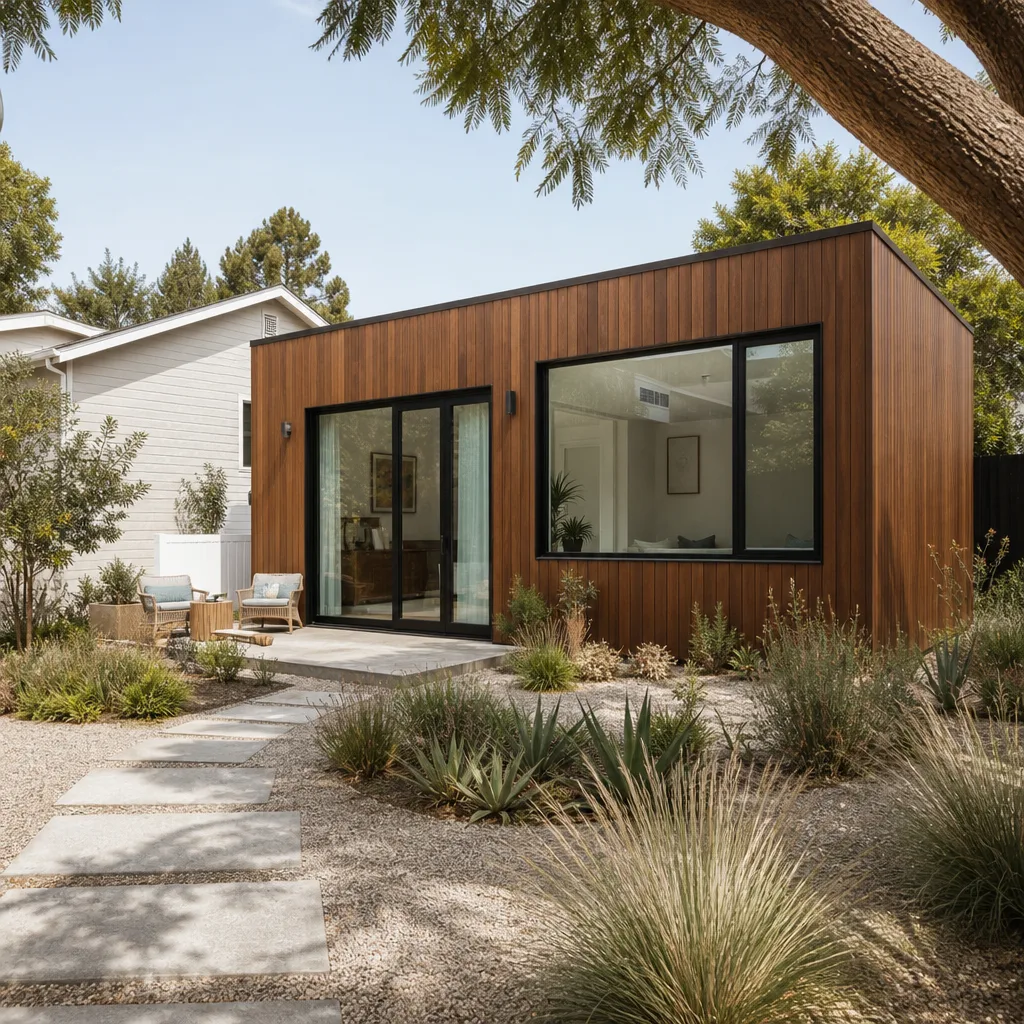
Between Year 3 and Year 5, the first generation of finish materials will show their first real wear. Not failure – wear. The homeowner’s job in this window is to distinguish between the two, because only one of them is a warranty claim.
Building-system issues (owner’s responsibility regardless of tenancy):
- Roof membrane seam lift or ponding, typically visible after Year 4 in Henderson’s heat cycle.
- Exterior caulk and flashing failures at any penetration point.
- HVAC efficiency decline, refrigerant charge loss, coil fouling.
- Wood or composite siding fading or checking – James Hardie products specifically have a manufacturer recoating interval; check the document.
- Gutters and scuppers that have begun to leak at seams.
- Any subpanel breaker degradation or water intrusion at the service feed.
Tenant-caused wear (addressed through the lease, not the warranty):
- Interior wall dings and scuffs.
- Screen and blind damage.
- Cabinet and appliance cosmetic wear.
- Landscaping changes that affect drainage.
- Anything tenant-installed: satellite dishes, hose bibs, window AC units (should be prohibited by lease).
The practical guidance: the owner inspects the ADU once a year with the lease in one hand and the warranty binder in the other, and tells the tenant in writing which items belong to whom. Under Clause 5 of the Haven Standard, the scope is locked at signing on the original build – no door-side upsells, no scope creep on the warranty claim either. If the item is a building-system failure within warranty, it’s a claim. If it’s tenant wear, it’s a lease item.
Maintenance Items That Affect Your ADU’s Compliance Status
Some maintenance isn’t about comfort or repair. It’s about the ADU’s legal standing as a dwelling unit. A Clark County inspection triggered by a complaint, a refinance appraisal, or a future sale can require you to demonstrate that the required life-safety systems are functioning. This is what a re-inspection looks for:
- Smoke detectors: Every sleeping room and the hallway serving it. Replacement cycle is typically every 10 years from manufacture date, with monthly test button checks and annual battery replacement on battery-backup units. Photoelectric preferred.
- CO detectors: Required on any level with a fuel-burning appliance or attached garage. Typical replacement cycle every 5 – 7 years from manufacture date. Check the manufacturer’s date on the back of the unit – not the install date.
- Egress window hardware: The sleeping-room egress window must open and close smoothly, with the latch operable from inside without a key or tool. Hardware that has bound or seized fails the egress standard.
- Electrical panel labeling: The subpanel breakers must be accurately labeled. A relabeled or partially labeled panel is a common re-inspection flag.
- GFCI and AFCI protection: Kitchen, bath, and exterior outlets on GFCI; bedroom circuits on AFCI. A push-button test once a year confirms function.
- Water heater and seismic strapping: If the ADU has its own water heater, the strapping, pan, and drain line must be intact.
None of that is difficult. All of it is skipped because it isn’t visible. The yearly compliance walk takes 15 minutes and prevents a much longer conversation with a county inspector.
Common Mistakes to Avoid
- Treating the ADU’s maintenance as part of the main house. A separate building needs its own calendar, its own warranty binder, and its own annual inspection. Folding it into the main house’s routine is how five-year problems start.
- Filing warranties without checking start dates. Manufacturer warranties start at manufacture, not occupancy. Photograph the data plates in the first month so you know the actual clock.
- Skipping the pre-monsoon drainage inspection. In Henderson, one clogged scupper during a July storm can put water into the wall cavity and trigger a slow, silent mold problem that isn’t discovered until the following spring.
- Replacing the HVAC filter on a “when I remember” schedule. A small-footprint unit running 90-day filters on a 180-day replacement cycle is running on borrowed time.
- Letting the tenant handle maintenance that belongs to the owner’s warranty obligations. Building-system failures reported by a tenant three months after they occur frequently fall outside the warranty window. Inspect annually with the lease and warranty in hand.
- Repainting siding without checking the manufacturer interval. James Hardie and similar products have specific recoating intervals and prep requirements; painting early and wrong can void the finish warranty.
- Ignoring the panel labeling and GFCI/AFCI test cycle. These are the items a re-inspection evaluates first, and they’re the cheapest to keep current.
When to Call a Professional
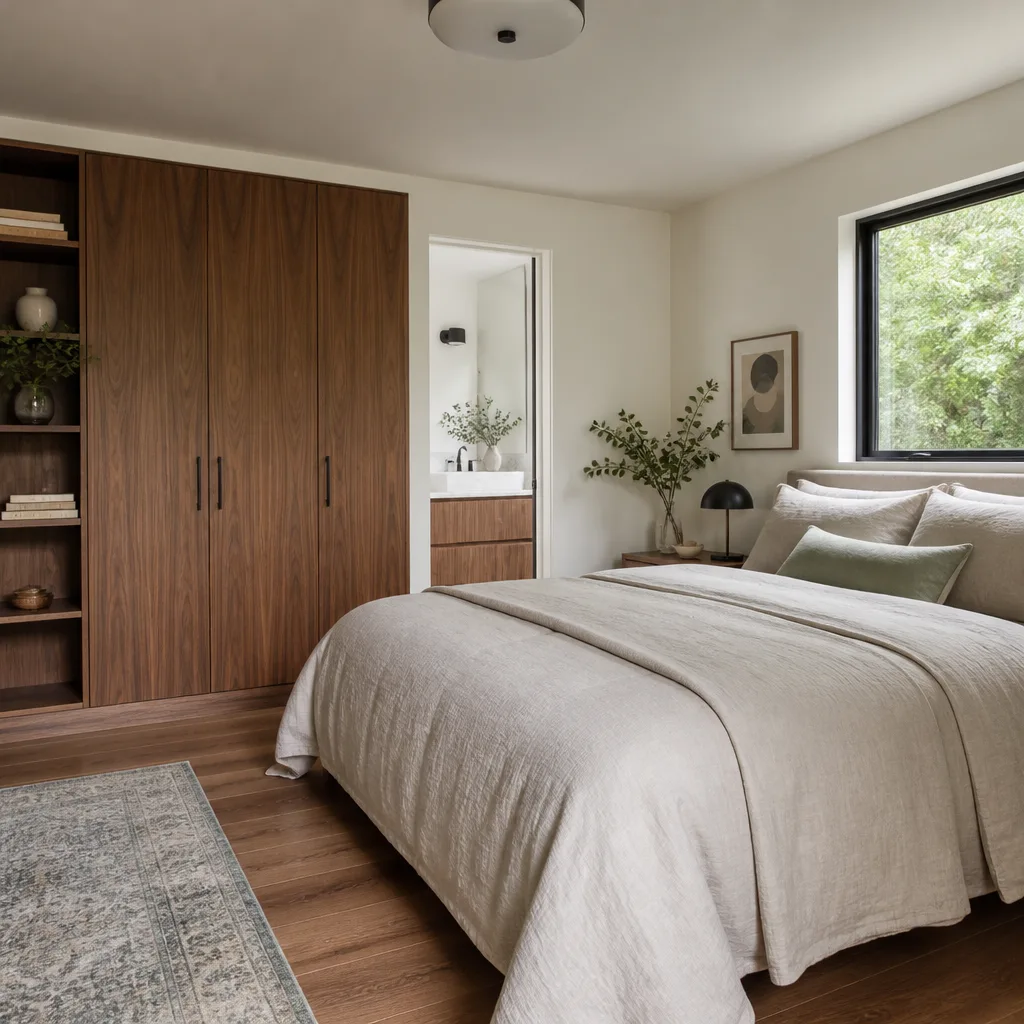
Call a professional for any of the following: roof membrane seam lift, ponding water after a storm, any staining at an interior ceiling or wall, HVAC refrigerant loss or a unit that won’t hold charge, subpanel breaker tripping, arcing residue on a panel face, water intrusion at a service feed, egress window hardware that won’t operate smoothly, or a re-inspection notice from Clark County. Don’t attempt the subpanel or the service feed – that’s a licensed electrician’s work. Don’t reseal a roof you can’t safely access. And don’t wait on the first sign of moisture intrusion; that’s the item where the timeline between “small” and “significant” is measured in weeks, not months.
Ellery ADU Studio Henderson offers free estimates in Henderson for the professional-scope items on this list – call (833) 632-6140. We’re a live person, 24/7, no callback queue. A written price before any work starts is the Haven Standard, Clause 1, and applies to every maintenance scope we quote. If you already have an estimate in hand from another contractor, the free second opinion is available on any written estimate.
Frequently Asked Questions
Every 60 to 90 days in Henderson, because a small-footprint ADU HVAC unit runs a harder duty cycle relative to its capacity than a full-size main-house system. During the June – September heat peak, 60 days is the safer end of that range. Clogged filters are the most common cause of premature compressor strain in a detached ADU, and it’s the cheapest maintenance item on the schedule. Call (833) 632-6140 for a written estimate on annual HVAC maintenance.
You should receive a separate warranty document for each of five systems: roofing (materials plus workmanship), HVAC (equipment plus labor), windows and doors (glazing plus frame), waterproofing (installer envelope warranty), and structural components (builder warranty). Each names the coverage period, the exclusions, the claim procedure, and the actual start date, which is usually tied to manufacture or installation. If you don’t have all five documents in a single binder, request them in writing before the final payment.
Yes. A detached ADU has its own roof, its own envelope, its own HVAC, and often its own subpanel and water connection. Its maintenance obligations don’t get absorbed into the main house’s routine, and its warranties are separate documents with separate claim procedures. The practical rule is one binder, one calendar, one annual inspection per year, dedicated to the ADU alone.
A Clark County re-inspection verifies life-safety hardware: smoke and CO detectors in the required locations with current manufacture dates, egress window hardware that operates smoothly without a key or tool, GFCI and AFCI protection on the required circuits, accurately labeled breakers at the subpanel, and water heater strapping and pan if the ADU has its own water heater. All of those are maintained by the yearly compliance walk described in this guide. Call us at (833) 632-6140 for a written estimate on a pre-inspection compliance check.
The tenant handles tenant-caused wear: interior scuffs, screens, blinds, appliance cosmetics, landscaping changes. The owner handles every building-system item regardless of tenancy: roof, envelope, HVAC refrigerant, subpanel, and compliance hardware. Write both lists into the lease and inspect once a year with the lease and the warranty binder in hand. That inspection is what distinguishes a warranty claim from a tenant-caused repair, and the documentation determines whether the warranty applies.
Plan on $450 – $900 per year in the first three years for the baseline schedule in this guide: HVAC filter replacements (about $40 – $80 in filters per year), one annual HVAC pressure and coil check ($150 – $350), one pre-monsoon roof and drainage inspection ($150 – $350), and consumables (caulk, detectors, batteries, GFCI test) at $100 – $150. Year 3 – 5 costs step up to $800 – $1,800 in a single year if the first roof and siding maintenance items come due. Call (833) 632-6140 for a written line-item estimate for your specific ADU – estimates are free.
The Bottom Line
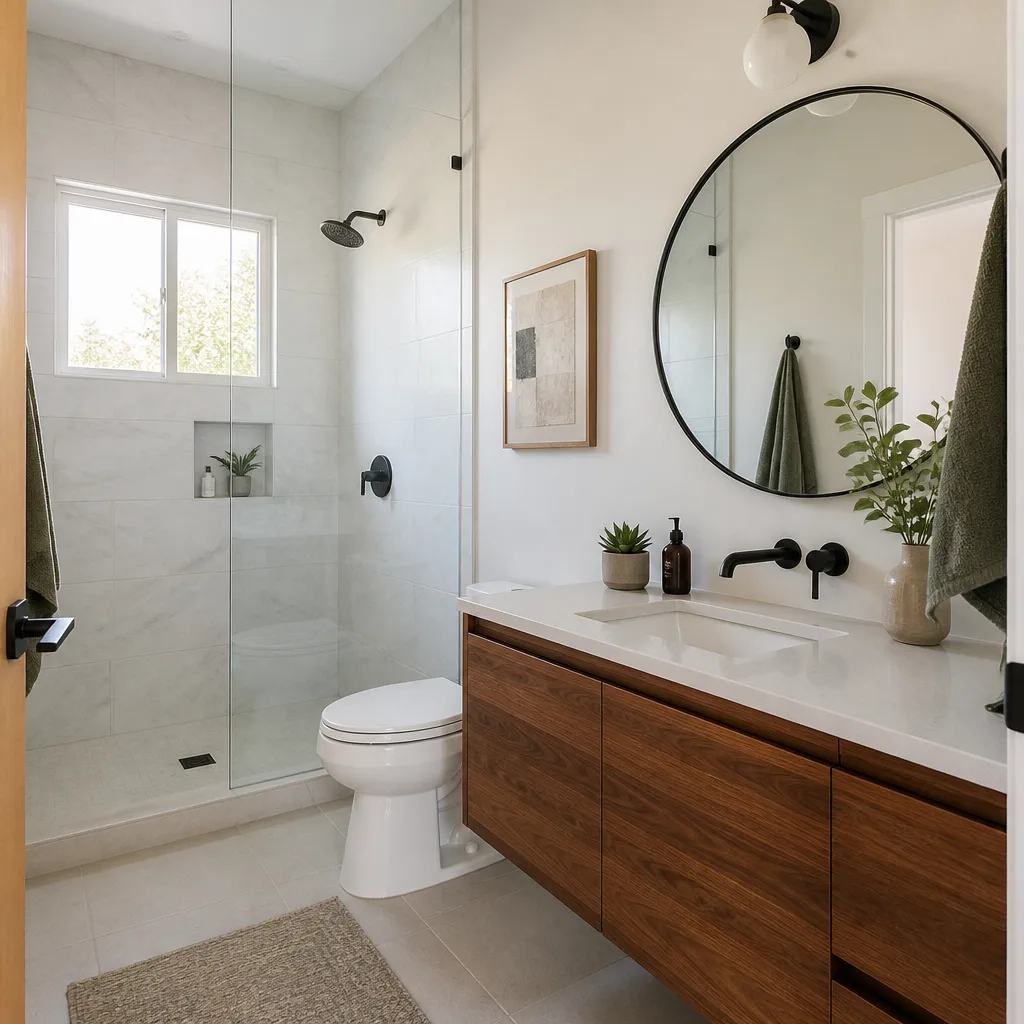
A new detached ADU is a separate building, and its maintenance should read as a separate property obligation. The first twelve months set the reference point: document everything, photograph the warranties at install, and run the Henderson-specific calendar around heat peak and monsoon. Years three through five separate building-system issues from tenant wear, and that separation is written into the lease and the warranty binder. Compliance hardware – smoke and CO detectors, egress windows, subpanel labeling, GFCI/AFCI – is a 15-minute yearly walk that keeps the ADU’s legal standing intact. Do those three things and the building is on a thirty-year trajectory, not a five-year one.
Ellery ADU Studio Henderson designs, permits, and builds new detached ADUs across Henderson under a single contract at a single written price. If you already own an ADU and need a maintenance scope quoted, or you’re in the planning phase and want to understand how the building is designed for this climate, call (833) 632-6140 for a free estimate. Visit the Ellery ADU Studio Henderson home page for the full range of services, including prefab and modular coordination with brands like Abodu and Dvele under the same single-contract structure.
Written by the team at Ellery ADU Studio Henderson.