Last updated November 18, 2026
ADU Site Prep & Utilities Troubleshooting: Common Problems and How to Fix Them
The most common site prep failure in Henderson ADU projects isn’t a construction mistake. It’s a utility company application submitted to the wrong department, which resets the queue clock to zero. We’ve watched a homeowner in Green Valley lose nine weeks that way, and nothing was wrong with the property. What follows is the working list we use: twelve problems that tend to surface late, in utility queues, failed inspections, and stale survey data, plus the specific fix for each one. If you’re planning an ADU in Henderson, this is the part of the schedule nobody warns you about.
Quick Answer
Most Henderson ADU site prep problems are documentation and utility-approval problems, not construction problems. The fixes are concrete: a current load calculation for the NV Energy service application, a fresh improvement location certificate from a Nevada land surveyor, a permitted sewer lateral repair before the county will issue, and a gas pressure test before Southwest Gas approves an extension. These items belong in the original written scope, not in a change order once framing starts.
Table of Contents
- Problem 1: NV Energy Rejects an Incomplete Load Calculation
- Problem 2: Clark County Flags a Setback Encroachment on a Stale Survey
- Problem 3: The Sewer Lateral Fails Camera Inspection
- Problem 4: The Existing Panel Is a Federal Pacific or Zinsco
- Problem 5: Southwest Gas Requires a Pressure Test on the Main Line
- How to Sequence Site Prep Work Before Framing
- Common Mistakes to Avoid
- Frequently Asked Questions
Problem 1: NV Energy Rejects an Incomplete Load Calculation
The rejection email is short and the fix isn’t obvious. NV Energy returns a new service application when the electrical load calculation covers only the ADU and ignores the main house. That’s the single most frequent utility rejection we see on Henderson ADU projects, and the correction means going back to the electrical engineer who stamped the permit set.
What the utility needs is a service entrance calculation showing combined peak demand: the ADU, the existing house, and any future load you might add. A newer Henderson house with a 200-amp panel usually has headroom. An older single-story near Downtown Henderson on a 100-amp service often doesn’t, and that’s when the conversation turns to a panel upgrade or a separate meter.
Here’s how the fix typically runs:
- The electrical engineer of record recalculates total service demand using the adopted code load factors, not just the ADU’s nameplate ratings.
- They issue a stamped service entrance calculation as a standalone document, matched to the NV Energy application number.
- The application is resubmitted with the calculation attached, and the utility queue clock restarts from the new submission date.
- The panel upgrade scope, if needed, lands in the written contract before work starts.
Build two to four weeks into the schedule for a resubmission. The essential thing is that the calculation lives in the permit set from day one, so there’s no resubmission at all.
Problem 2: Clark County Flags a Setback Encroachment on a Stale Survey
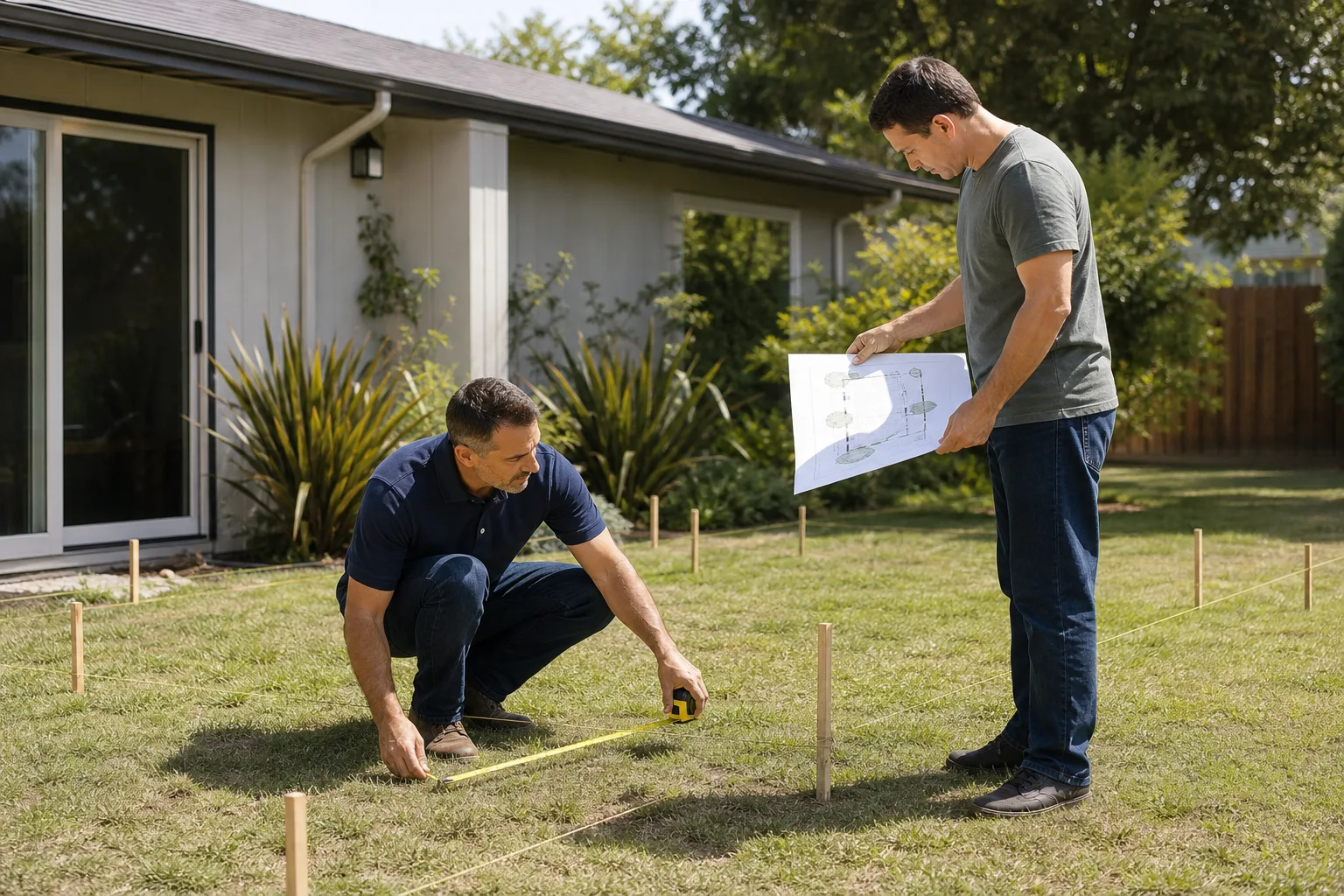
Setback review is where old paperwork bites. Clark County reviews the site plan against a current survey, and a boundary survey from the 1990s doesn’t qualify. We’ve seen a Henderson project flagged because the only survey on file predated a subdivision adjustment; the fence line was wrong by almost two feet and the proposed ADU looked like it encroached.
The fix is an improvement location certificate, or ILC: a fresh survey document from a licensed Nevada land surveyor showing where the structures, fences, and utilities sit relative to the boundary. It typically costs $600 to $1,200 and takes two to four weeks to schedule in the Henderson area.
Once the ILC is in hand, three things happen at once:
- The site plan is redrawn against real dimensions, so the setback is confirmed rather than estimated.
- Any variance request, if one is needed, is filed with accurate numbers instead of guesses.
- Utility locates become reliable because the surveyor ties improvements to known monuments.
Ordering an ILC at the start of design, before the permit set is drafted, is the difference between a clean review and a six-week resubmission cycle. It belongs in the ADU design and permitting phase, not in the construction budget.
Problem 3: The Sewer Lateral Fails Camera Inspection
A camera inspection is standard on any Henderson ADU project with plumbing, and the findings are often unwelcome. Root intrusion, offset joints, and old cast iron with internal scaling all show up in older neighborhoods like Downtown Henderson and the streets near Water Street. Clark County requires the lateral to be cleared before issuing the ADU plumbing permit, so the repair becomes a prerequisite, not an optional item.
The trap is treating it like an emergency. A permitted sewer lateral repair takes three to six weeks from a licensed plumber, including the excavation permit, the inspection, and backfill. If that’s squeezed into the schedule as a crisis, it delays the ADU by weeks. If it’s planned, it’s just a line item.
In our experience, the repairs split into two buckets:
- Root intrusion only: often cleared by jetting, typically $300 – $600, with a follow-up camera to verify.
- Offset or collapsed joints: requires excavation and replacement of the affected section, usually $2,500 – $7,500 depending on depth and driveway crossings.
For a garage conversion or a new detached ADU, the plumbing layout determines how much of the existing lateral is reused. The camera inspection should run before the design is finalized, so the plumbing plan matches the reality underground.
Problem 4: The Existing Panel Is a Federal Pacific or Zinsco
This is the single most expensive surprise in Henderson ADU site prep. NV Energy won’t extend service from a Federal Pacific Stab-Lok or Zinsco panel, and many Henderson homes built between the late 1960s and early 1980s still have one. The panel has to be replaced before the ADU service is energized, and that’s a $4,000 – $7,500 scope item once you include the panel, the meter socket, the grounding, and the inspection.
Federal Pacific breakers are known to fail to trip under overload, and Zinsco panels have a documented history of bus damage and breaker arcing. That’s why the utilities treat them as a service-extension blocker rather than a code nuance. The replacement isn’t optional.
Two rules we apply:
- Photograph the panel interior during the initial site walk, and read the brand off the breaker faces. If it says “Federal Pacific,” “Stab-Lok,” or “Zinsco,” the replacement goes into the written price before work starts.
- Coordinate the panel replacement with the service upgrade so there’s one outage, not two. The ADU tie-in and the main house both get powered back on the same day.
Under Haven Standard Clause 1, this is written into the original contract. A homeowner should never learn about a Federal Pacific panel from a change order after the drywall goes up.
Problem 5: Southwest Gas Requires a Pressure Test on the Main Line
If the ADU uses a gas appliance, the gas line extension permit from Southwest Gas requires a pressure test on the existing main service line before the extension can be approved. In Henderson, that test is where hidden problems surface. A main line that was installed in the 1970s and has been quietly seeping at a fitting for years won’t hold pressure, and the repair becomes the homeowner’s responsibility.
The repair is a separate permit and a separate trade contractor. Budget $1,500 – $4,000 for a main line repair, sometimes more if the leak is under a slab or a driveway. The work itself takes a week to ten days once the plumber is on site, plus inspection scheduling.
What we do to prevent the surprise:
- Run the pressure test during design, not during construction. It’s a small cost early and a huge schedule saver late.
- If the main fails, get three bids from licensed gas plumbers and treat the repair as a scheduled line item, not a change order.
- Consider a heat-pump water heater and induction range for the ADU, which sidesteps the gas extension entirely. Many Henderson homeowners choose that route for the simpler permitting path.
Either way, the decision belongs in the written scope, and the garage conversion ADU plan should reflect it before the permit set is submitted.
How to Sequence Site Prep Work Before Framing
Sequence is everything on Henderson ADU site prep. The order below is what we use on every project, and it front-loads the work that has the longest utility queue times.
- Week 1 – 2: Order the improvement location certificate and a sewer lateral camera inspection. These are the two slowest documents to schedule.
- Week 2 – 3: Photograph the electrical panel, gas meter, and water service. Confirm panel brand and main line condition. Run the gas pressure test.
- Week 3 – 4: Submit the electrical load calculation to NV Energy with the complete service entrance calculation and the permit set attached. The utility queue is the longest clock in the project.
- Week 4 – 6: Submit the Southwest Gas extension application, with the pressure test result attached.
- Week 6 – 8: Complete any sewer lateral repair with a permit and inspection.
- Week 8 – 10: Submit the Clark County site plan review with the current ILC and the corrected site plan.
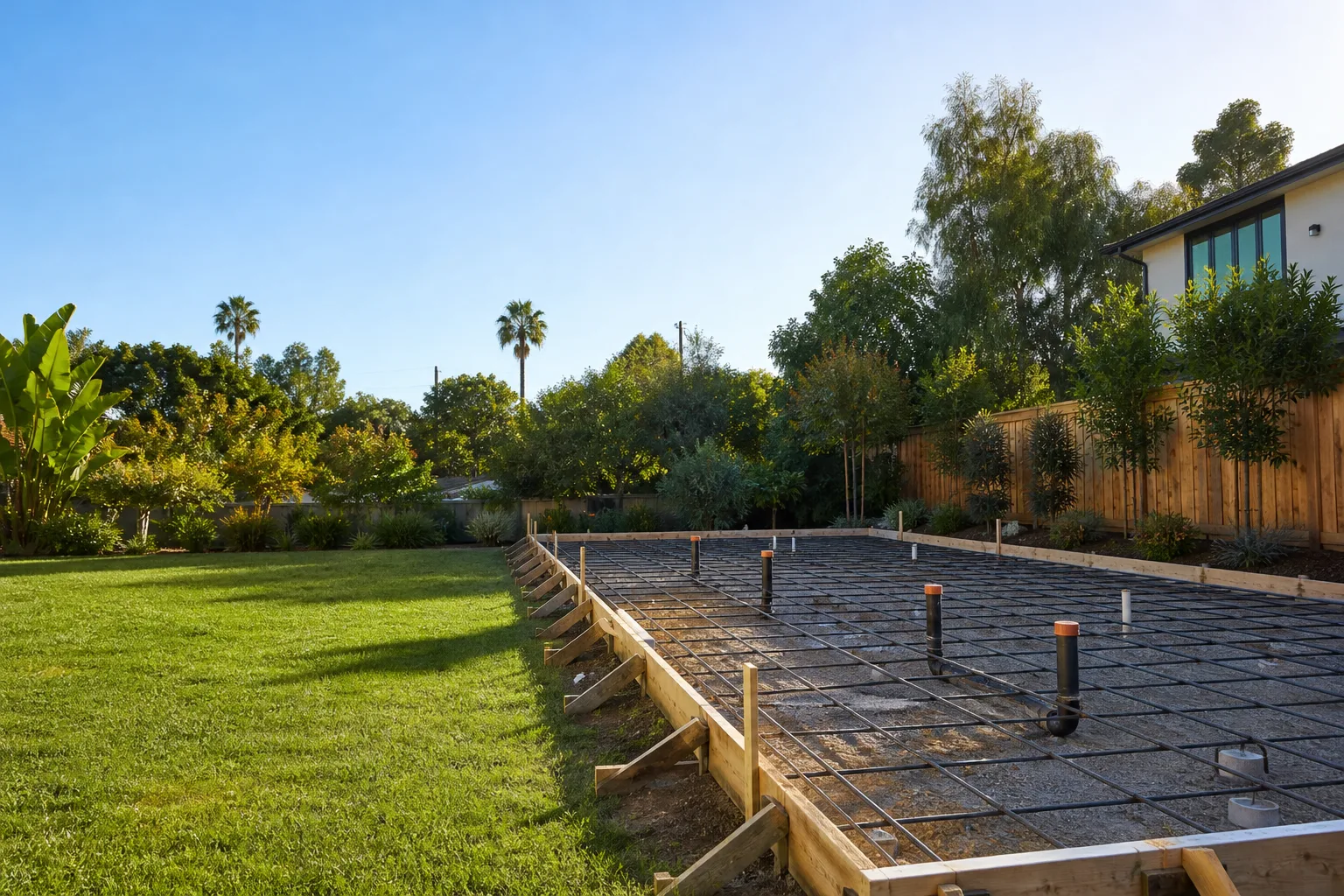
- Week 10+: Foundation, framing, and MEP rough-in, with utilities already approved and the panel replacement done.
Every one of these steps has a Clark County or utility queue behind it, and none of them contract if you rush. Sequencing them in parallel, rather than in series, is what keeps a Henderson ADU on schedule. The Ellery ADU Studio Henderson home page lays out how the site prep scope fits into the full design-build contract.
Common Mistakes to Avoid
- Submitting the electrical application with the ADU load only. NV Energy returns it, the queue resets to zero, and the whole schedule slides. The calculation must cover combined service demand, ADU plus house.
- Using a survey that predates the current ADU setback code. Clark County won’t accept an old boundary survey for setpoint review. Order a fresh ILC before design, even if a survey is already in the drawer.
- Treating a sewer lateral repair as an emergency. A permitted repair takes three to six weeks. If it’s not flagged in site prep, it becomes a schedule crisis in the middle of foundation work.
- Missing the Federal Pacific or Zinsco panel during the initial scope. It’s a $4,000 – $7,500 line item. Skipping it turns into a change order plus two weeks of electrical delay.
- Skipping the gas pressure test until the extension is submitted. A failed main line requires a separate permit and a separate trade contractor, and Southwest Gas won’t approve the extension until the repair passes inspection.
- Running site prep sequentially instead of in parallel. Survey, sewer, electrical, gas, and site plan review all have utility queues. Arrange them at the same time and most of the schedule conflict disappears.
- Choosing a prefab system without confirming its utility tie-in requirements. A Mighty Buildings or Boxabl unit still needs the same NV Energy service calculation and Southwest Gas pressure test as a site-built ADU. The utility work doesn’t go away.
When to Call a Professional
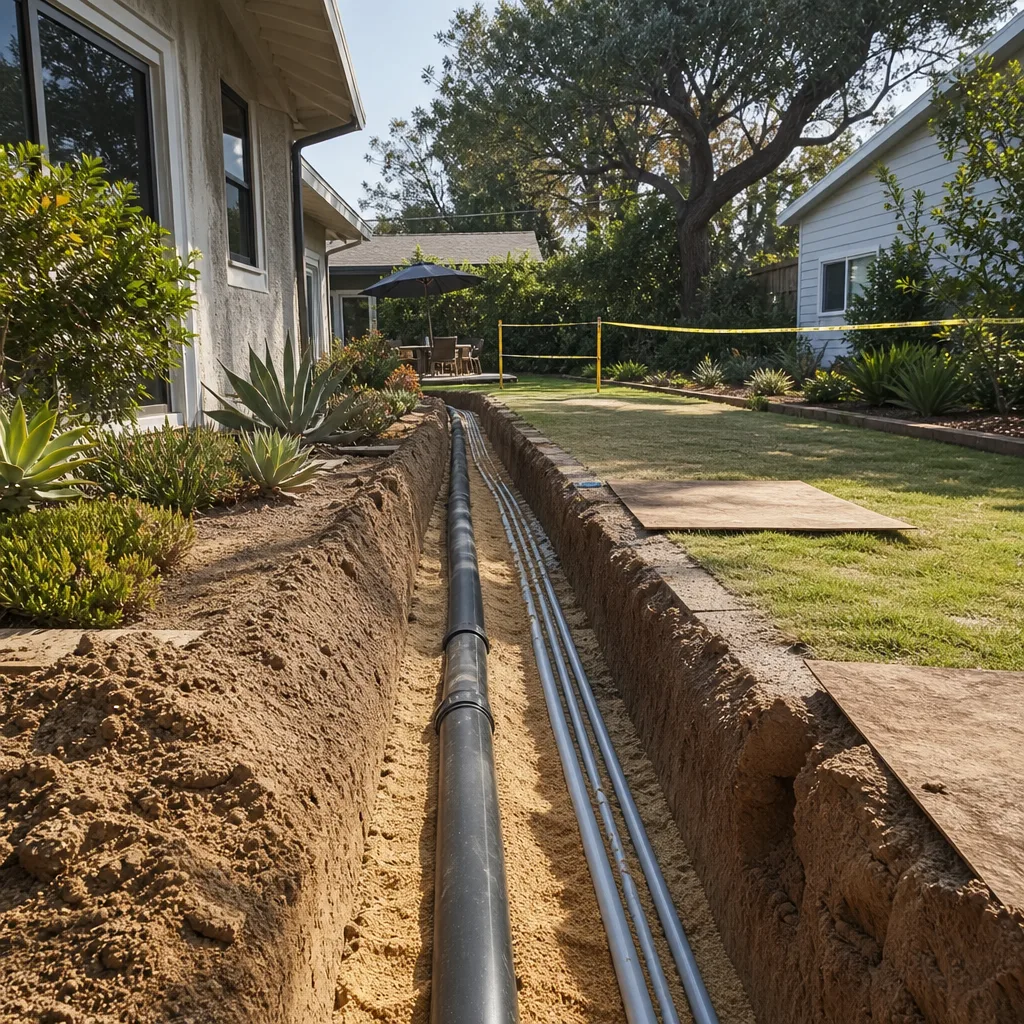
Site prep has real danger in it. Gas line pressure testing involves live utility service, and any work on a Federal Pacific or Zinsco panel carries a genuine arc-flash risk because the breakers don’t trip the way modern ones do. Sewer excavation near a foundation, utility locates, and service-entrance work all belong to licensed tradespeople, not DIY.
Call a professional when any of these show up: a settlement or crack in the sewer lateral camera footage, a gas pressure test that fails, a panel brand you’re not sure about, an old survey that doesn’t match today’s fence line, or a utility rejection letter you’d rather not decode on your own. The early call is cheap; the mid-construction call is not.
Ellery ADU Studio Henderson offers free estimates in Henderson. We quote a written price before work starts, under Haven Standard Clause 1. Call (833) 632-6140 to schedule yours, and we’ll walk the site with you.
Frequently Asked Questions
Plan on eight to twelve weeks from the first site walk to the start of foundation work. The utility queues are the long poles: NV Energy service review, Southwest Gas extension approval, and Clark County site plan review each take weeks. Running them in parallel instead of in sequence is what keeps a Henderson ADU in that window rather than stretching to four or five months.
NV Energy rejects an ADU service application when the load calculation covers only the new ADU and ignores the existing house’s peak demand. The utility needs a combined service entrance calculation from the electrical engineer of record. Call (833) 632-6140 if you’ve already received a rejection and want a second look at the calculation before you resubmit.
Clark County requires a current improvement location certificate for ADU site plan review, and a survey from 1990 or earlier almost never qualifies. Fence lines shift, structures get added, and boundary monuments move. A new ILC from a licensed Nevada land surveyor typically runs $600 – $1,200 and takes two to four weeks. It’s the cheapest insurance in the whole ADU budget.
NV Energy won’t extend service from a Federal Pacific Stab-Lok or a Zinsco panel, so the replacement is mandatory before the ADU can be energized. Budget $4,000 – $7,500 for the panel, meter socket, grounding, and inspection. It should be written into the original scope under Clause 1 (No Surprises), not added as a change order after framing. Call (833) 632-6140 for a free second opinion on any estimate you already have.
Yes, if the ADU uses all-electric appliances. A heat-pump water heater and an induction range skip the Southwest Gas permit, the pressure test on the main line, and the main-line repair risk altogether. Many Henderson homeowners choose that route because the permitting path is shorter. The trade-off is a modest increase in the electrical service load, which goes back into the NV Energy calculation.
Utility application rework, not construction. A rejected NV Energy load calculation or a stale survey that forces a site plan resubmission each adds three to six weeks to the schedule. In our experience, roughly half of the Henderson ADU projects that go long are long because of utility or survey paperwork, not because of the build itself. Front-loading those submissions is how you avoid it. For a closer look at how the full scope fits together, see the garage conversion ADU guide.
The Bottom Line
ADU site prep in Henderson fails on paperwork and utility queues far more often than on construction. NV Energy wants a combined load calculation. Clark County wants a current ILC. The sewer lateral has to pass camera inspection before the plumbing permit issues. Federal Pacific and Zinsco panels get replaced, not extended. Southwest Gas requires a pressure test on the main line. None of these are mysteries, and each one has a written corrective cost. The projects that run on schedule are the ones where every item above is scoped, priced, and submitted before the first foundation form goes in.
Get a Written Site Prep Price Before You Commit
Site prep is the least glamorous part of an ADU project and the one that decides whether the rest of it runs on time. We quote every project at a written price before any work begins, under Haven Standard Clause 1, and we back every visit with a documented photo record of what we found and what we did. If you already have a written estimate in hand, we’ll give you a free second opinion on it. Call (833) 632-6140 to schedule your free estimate in Henderson.
Written by the team at Ellery ADU Studio Henderson.