Last updated November 18, 2026
ADU Site Prep & Utilities Maintenance Schedule: What to Do and When
A Henderson ADU landlord once discovered their sub-meter had been reading 12% low for eighteen months. No one tampered with it. The meter socket connection had oxidized in the desert heat, corroding the contacts until the reading drifted. When the landlord called NV Energy expecting a fix, they got the answer every ADU owner eventually hears: the meter socket belongs to the property owner, not the utility. This guide covers the maintenance calendar that branches off from your main house’s, the intervals that differ, and the documentation that keeps a Henderson ADU in compliance and ready to sell.
Quick Answer
An ADU’s utility infrastructure needs its own maintenance schedule because its connection points – the sub-meter socket, the sewer lateral cleanout at the property line junction, the backflow preventer on a separately metered water service, and the trenched conduit runs – age and fail on a different clock than the main house systems they branch from. In Henderson, that means scoping the ADU lateral every 3 years, inspecting and torque-checking the meter socket every 5 years, testing the backflow preventer annually with the result filed with the City of Henderson Water Utility, and verifying conduit surface markers every year before irrigation season. Log every visit in one ADU infrastructure file kept with the permit set.
Table of Contents
- Why an ADU Needs Its Own Maintenance Calendar
- The Meter Socket: What NV Energy Owns and What You Own
- Scoping the ADU Sewer Lateral Cleanout Every 3 Years
- The Backflow Preventer and Your Annual Filing with Henderson Water Utility
- Verifying Trenched Conduit Markers Before Irrigation Season
- Building the ADU Infrastructure Log
- The Full Year-at-a-Glance Schedule
- Site Prep Items That Age Too
Why an ADU Needs Its Own Maintenance Calendar
Every connection point on an ADU is new construction grafted onto an existing system, and new connections age differently than the original. The main house lateral has been settling for decades; the ADU junction is still moving. The main panel has carried its load since day one; the ADU subpanel and meter socket were added recently and see a different thermal cycle. If you maintain the ADU on the main house’s schedule, you will always be early on some items and dangerously late on others.
Henderson’s climate sharpens the gap. Summer highs push 110°F, and the daily swing between a sun-baked meter enclosure and a 78°F evening works metal contacts loose over time. Irrigation is heavy in Henderson neighborhoods like Green Valley and Anthem, which means root intrusion near the ADU lateral is driven by where your drip lines run, not by the age of the pipe. The ADU cleanout sits in a different soil moisture zone than the main house cleanout does.
One more reason the calendars diverge: documentation. The ADU has its own permit set, its own inspection history, and its own warranty trail. Under the Haven Standard, every visit to an Ellery project comes with a documented photo record of what was found and what was done. That record lives with the ADU file, and it is the thing a buyer’s agent asks for at resale. If the calendar was never separated from the main house’s, the file is empty.
The Meter Socket: What NV Energy Owns and What You Own
Here is the division of responsibility that surprises most ADU owners. NV Energy owns the meter itself and the service drop up to the point of connection. The property owner owns the meter socket, the riser, and everything downstream. When the socket connection oxidizes – which it does in Henderson’s heat and dust – the utility will note a reading discrepancy but will not repair the socket. That is a licensed electrician’s job, and it is on your calendar.
We recommend an inspection and torque check of the ADU meter socket every 5 years, and sooner if you notice any of these signs:
- A sudden jump or drop in the ADU sub-meter reading that does not match usage.
- Discoloration, greenish corrosion, or heat marks on the socket enclosure.
- A warm enclosure to the touch on a mild day.
- Flickering lights in the ADU when the main house load is steady.
- Buzzing at the meter can, which usually points to a loose connection.
The torque check matters because aluminum and copper lugs loosen under thermal cycling, and a loose lug is a fire risk, not just a billing error. Ask the electrician to record the torque values and photograph the socket before and after. That photo goes in the infrastructure log. For context on how the electrical service gets designed in the first place, see our ADU Design & Permitting in Henderson page, where the single-line diagram and load calculation are part of the permit set.
Scoping the ADU Sewer Lateral Cleanout Every 3 Years
Clark County requires a separate cleanout at the property line junction where the ADU lateral ties into the main sewer. That cleanout is an inspection port, and it exists so a plumber can scope the ADU run without pulling a fixture. The mistake is scoping it on the same 5-to-7 year cycle as the main house lateral. We scope the ADU lateral every 3 years in Henderson, and here is why.
Root intrusion follows irrigation, not pipe age. In a Henderson yard with mature ficus, elm, or mesquite near the ADU footprint, the new lateral’s backfill is looser and better aerated than the original trench, which makes it a magnet for roots seeking water. The ADU cleanout sits closer to the landscaping than the main house cleanout does in most of the layouts we build. Three-year scoping catches root intrusion while it is still a cable-and-cutter job instead of a dig-up.
What to ask for during the scope:
- Camera the full ADU lateral from the new cleanout to the property line junction.
- Record the camera run and note any root intrusion, bellies, or offset joints.
- Confirm the cleanout cap threads freely and seats watertight.
- Photograph the cleanout location and depth for the log.
- File the footage with the permit set, not in a drawer in the garage.
If the ADU was built as a garage conversion, the lateral may tie in at a shallower depth than a detached unit’s, which makes it more vulnerable to root pressure and settlement. Our Garage Conversion ADU in Henderson page covers how the drain routing is documented in those builds.
The Backflow Preventer and Your Annual Filing with Henderson Water Utility
When an ADU has its own water meter, a backflow preventer is required on that service, and it must be tested annually by a licensed backflow tester. The test result is filed with the City of Henderson Water Utility. Miss the filing and you can expect a compliance notice – and in some cases a service interruption until the test is on record. This is the single most commonly missed item on the ADU calendar because it is annual, it involves a third party, and the deadline does not announce itself.
The test itself takes about 20 minutes. The tester connects gauges to the assembly’s test cocks, runs the check, and produces a report that gets submitted to the utility. What owners get wrong:
- Assuming the plumber who installed the assembly can test it. They often cannot; the test requires a certified backflow tester.
- Letting the filing lapse because the assembly “looks fine.” It can look fine and still fail the differential pressure check.
- Skipping the test when the ADU is vacant. Vacancy does not pause the requirement.
- Losing the test report. The utility has it, but your log should too.
Schedule the test in the same month every year – we suggest pairing it with the annual conduit marker check below – so it becomes habit. Keep the stamped test report with the permit set. New detached ADUs with separate meters should have this on the calendar from the day the meter is set; see New Detached ADU in Henderson for how the water service design is scoped before construction.
Verifying Trenched Conduit Markers Before Irrigation Season
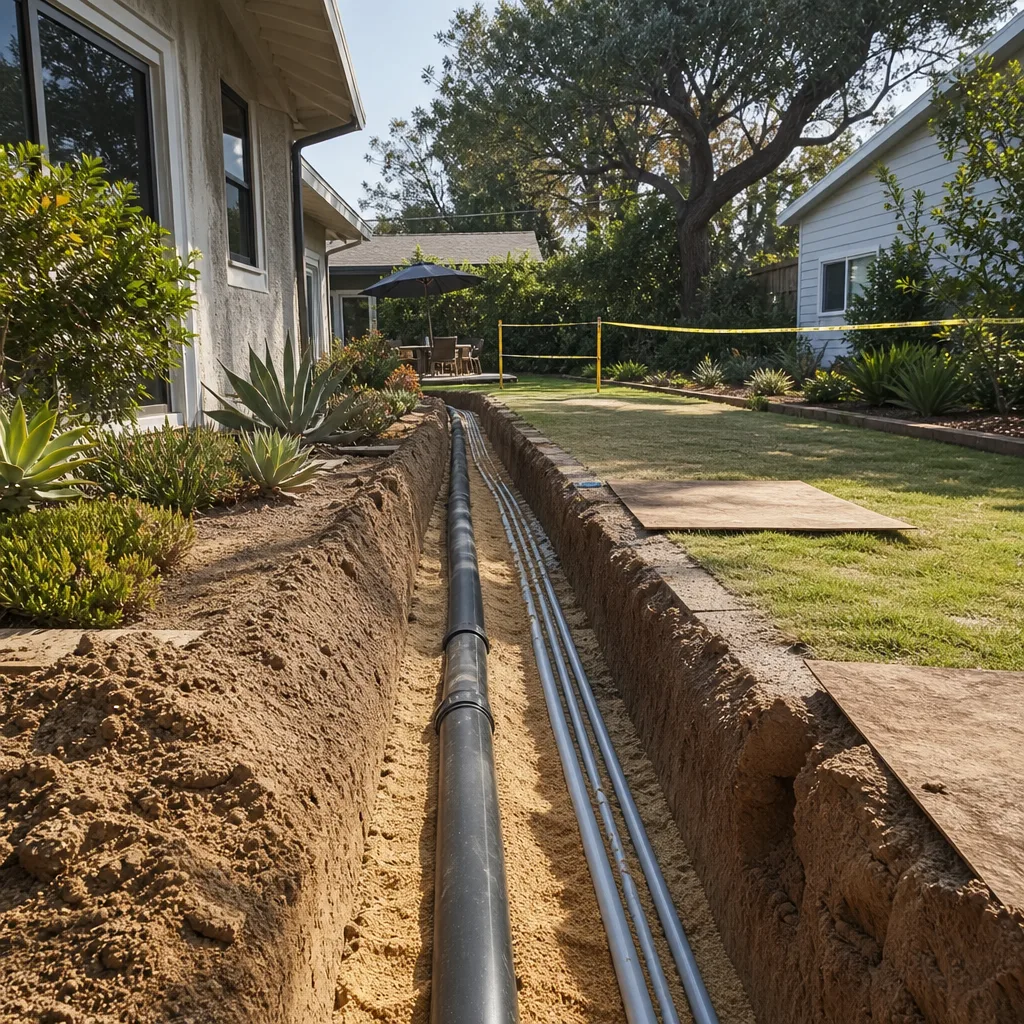
Every trenched utility run to an ADU – electrical feeder, low-voltage data, gas line if applicable – should have surface markers or a marked path at the surface. Verify them annually, before irrigation season begins in Henderson, because landscaping contractors cut through unmarked conduit with alarming regularity. The most common scenario: a crew is re-doing drip lines in March, hits a trench they did not know was there, and puts a spade through the ADU feeder or the data run.
The annual check is simple and worth doing yourself:
- Walk the known conduit path from the main panel to the ADU and confirm every marker is present and legible.
- Photograph each marker with a reference point (a fence post, a hose bib, a tree) so the path is documented, not remembered.
- Note any landscaping changes since last year – new beds, new trees, new hardscape – and confirm the path was not disturbed.
- If a marker is missing, reinstall it before any irrigation work is scheduled.
- Before hiring any landscaper or hardscaper, hand them the marked path diagram from your log.
Low-voltage data runs are the quiet casualty. A cut Cat6 or fiber run to an ADU does not trip a breaker, it just drops your internet, and the cause is easy to misdiagnose. Marking the path is cheaper than re-trenching. For homeowners coordinating a prefab ADU – Abodu and Dvele both ship with defined utility connection points – the trench path is set by the site plan, which makes marking it simpler.
Building the ADU Infrastructure Log
The single most valuable thing you can do for a Henderson ADU is keep one log of every utility maintenance visit, stored with the permit set. In a Nevada real estate transaction, that log is a material disclosure item. When a buyer asks whether the ADU sewer lateral has been scoped, whether the backflow test is current, and whether the meter socket has been inspected, you either have the records or you do not – and “I think so” costs you at the negotiating table.
The log should hold:
- Dates and results of every lateral scope, with camera footage.
- Annual backflow test reports, stamped and filed.
- Meter socket inspection and torque records, with photos.
- Conduit marker verification photos, dated annually.
- Any repairs, with the contractor’s name, license number, and scope.
- The original permit set and the final inspection sign-offs.
Keep a physical copy in a binder and a digital copy in cloud storage. Under Clause 5 (No Surprises), the scope of any maintenance work is locked before it starts, so each entry in the log should show the written scope, the price, and the photo record of the work done. That is what makes the log credible to a buyer’s inspector. For the full picture of how a Henderson ADU is documented from design through construction, start with the Ellery ADU Studio Henderson home page.
The Full Year-at-a-Glance Schedule
Here is the schedule in one place, organized by interval so you can build the calendar once and follow it.
Every year
- Backflow preventer test – licensed tester, result filed with City of Henderson Water Utility.
- Conduit marker verification – before irrigation season, with dated photos.
Every 3 years
- ADU sewer lateral scope – camera from the ADU cleanout to the property line junction.
Every 5 years
- Meter socket inspection and torque check – licensed electrician, with photos and torque values recorded.
Ongoing
- Update the infrastructure log after every visit.
- Photo-document any landscaping change along the conduit path.
- Review the ADU file before any resale listing or refinance appraisal.
Ellery technicians have up to 11 years of experience on ADU utility work, and in our practice the biggest driver of a smooth resale is a log that was maintained all along rather than reconstructed at the last minute. That is the difference between a documented asset and a hopeful one.
Site Prep Items That Age Too
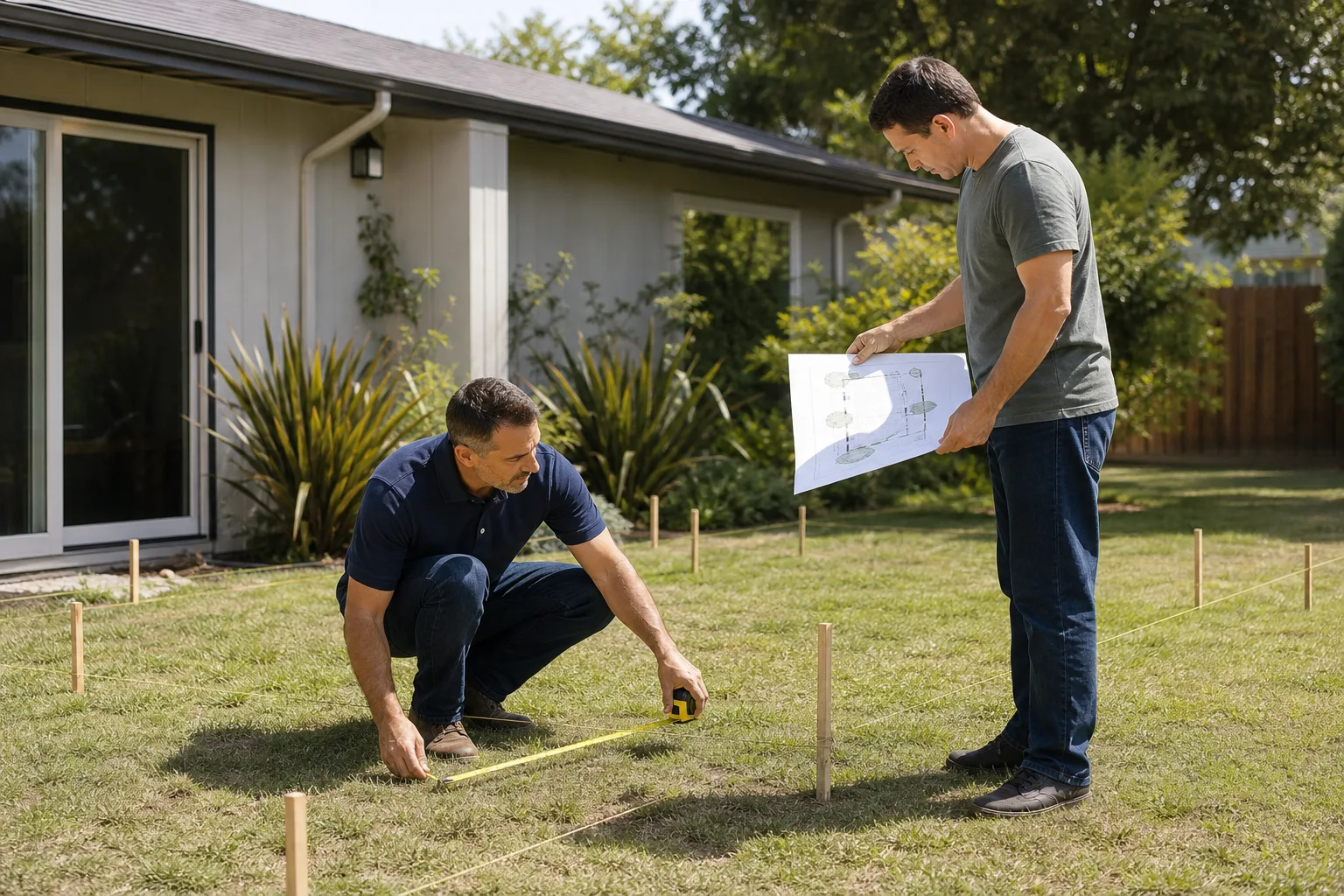
Site prep does not end at final inspection. The grading, drainage, and hardscape around an ADU continue to move, and in Henderson’s expansive soils they move more than most owners expect. Two items deserve a place on the calendar alongside the utility checks.
First, the drainage swale or French drain that carries roof water away from the ADU. Check it annually before monsoon season, clear debris, and confirm water still grades away from the foundation. Second, the exterior cladding and trim at the ADU service penetrations – where conduit, water, and gas enter the envelope. James Hardie siding holds up well, but the caulk at penetrations needs inspection every few years. A small gap at a conduit penetration is a water intrusion point and, over time, a pest entry point.
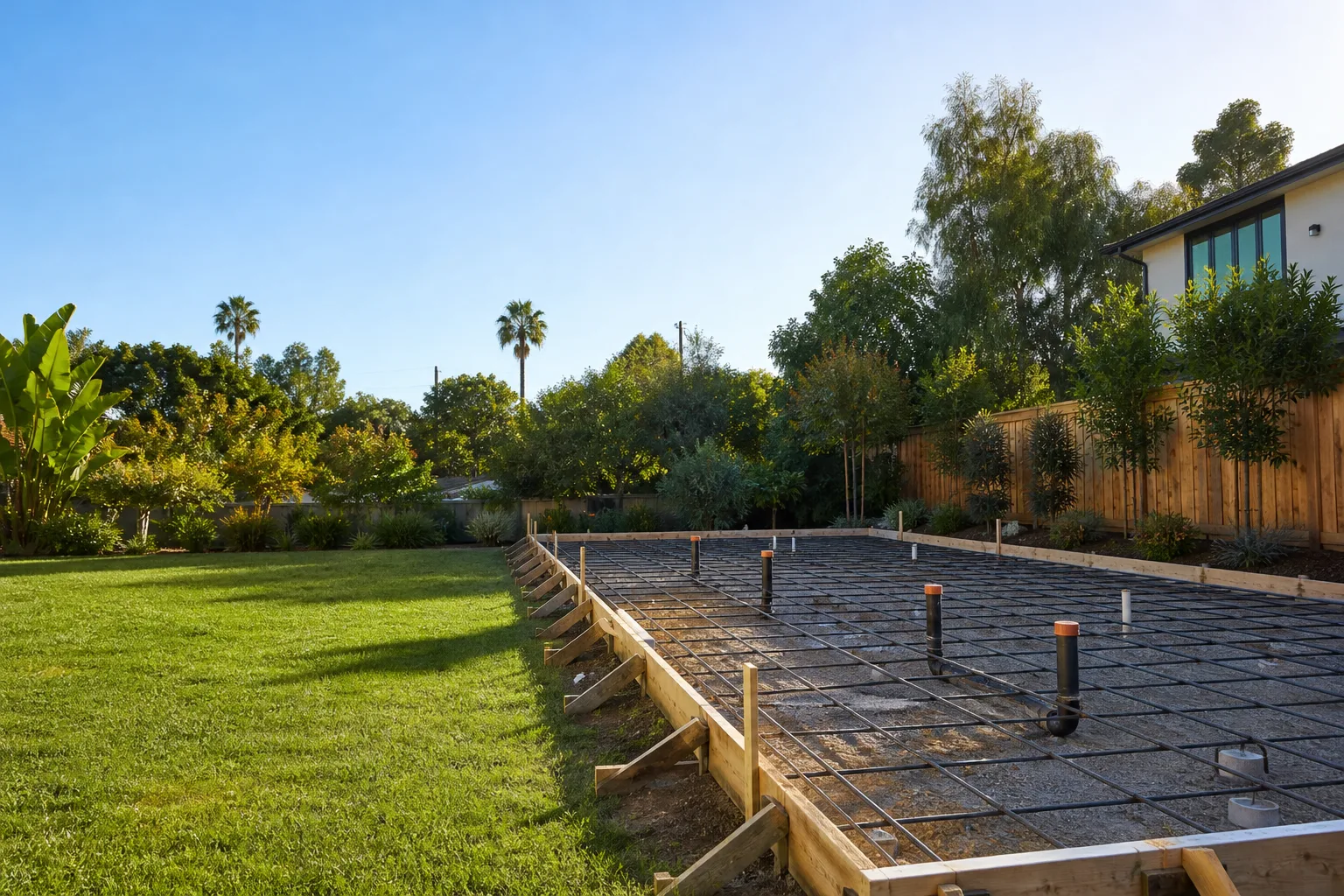
Third, the pad and footings on a detached unit. Look for new cracks in the slab or separation at the wall-to-slab joint, photograph them with a date, and compare against last year’s photo. Slow movement is normal; fast movement is not. If a crack widens between annual checks, that is a call, not a wait-and-see. For site prep scope on a project in progress, our site prep and utilities work is quoted under the same written price as the rest of the build, per Haven Clause 1.
Common Mistakes to Avoid
- Running the ADU on the main house calendar. The lateral, meter, and backflow all run on different intervals than their main-house counterparts, and treating them the same means the ADU is either over-serviced or dangerously late.
- Assuming NV Energy maintains the meter socket. They own the meter; you own the socket. Oxidation in Henderson heat is a property-owner repair, and the bill drift can run for a year before anyone notices.
- Letting the backflow test lapse because the ADU is vacant. The annual filing requirement does not pause for vacancy, and a compliance notice from Henderson Water Utility is a headache you do not need.
- Skipping the lateral scope until there is a backup. A 3-year camera run catches roots while they are a cutter job; waiting for a backup usually means a dig-up.
- Not marking the conduit path before hiring a landscaper. Henderson landscape crews cut through unmarked conduit regularly, and a severed data run can take a week to diagnose.
- Keeping records in your head. If the infrastructure log is not written down and filed with the permit set, it does not exist at resale, and the disclosure gap costs money.
- Ignoring small cracks between annual photos. A crack that widens year over year is a signal; the photo record is what turns a guess into a diagnosis.
When to Call a Professional
Call a licensed professional for anything involving the electrical service, the sewer lateral, or the backflow assembly. Meter socket work is not a homeowner job – the enclosure is live and the torque values matter. A lateral that has backed up, or a camera run that shows root intrusion or a belly, needs a drain specialist. A backflow test needs a certified tester, full stop. Gas line work and anything inside the service panel should go to a licensed trade. And if you are buying or selling a Henderson property with an ADU, get the infrastructure log reviewed before listing. Ellery ADU Studio Henderson offers free estimates in Henderson – call (833) 632-6140 to talk through what your ADU needs and when.
Frequently Asked Questions
Every 3 years for the ADU lateral specifically, even if the main house lateral is on a 5-to-7 year cycle. Root intrusion follows irrigation proximity, and the ADU trench is usually closer to landscaping than the original main-house trench, so the ADU run needs a tighter interval. Call (833) 632-6140 for an exact quote on scoping – estimates are free.
The homeowner owns the meter socket, the riser, and everything downstream of the point of connection; NV Energy owns the meter and the service drop. In Henderson’s heat, socket connections oxidize and loosen, which causes reading drift and a fire risk, so an inspection and torque check every 5 years is the owner’s responsibility. Call (833) 632-6140 to schedule an inspection.
Yes – when the ADU has a separately metered water service, the backflow preventer must be tested annually by a licensed tester and the result filed with the City of Henderson Water Utility. A lapsed filing can trigger a compliance notice. Call (833) 632-6140 for a written quote on testing and filing.
You lose power or data to the ADU, and the repair means re-trenching and re-pulling the run. That is why verifying surface markers annually, before irrigation season, is on the schedule. If a cut happens, call (833) 632-6140 – we can quote the repair in writing before any work starts.
Yes, but the specific intervals can shift because a conversion’s lateral may tie in shallower and its service routing differs from a detached unit. The annual backflow test and conduit check still apply; the lateral scope interval is set by inspection of the actual route. Call (833) 632-6140 for a free second opinion on any estimate you already have.
It is a material disclosure item in a Nevada transaction, and a maintained log with dated photos, test reports, and scope records is what a buyer’s inspector asks for. An undocumented ADU invites price concessions at closing. Call (833) 632-6140 to talk through how to bring a neglected log up to date.
The Bottom Line
An ADU’s utility infrastructure fails on its own clock: scope the lateral every 3 years, inspect and torque the meter socket every 5, test and file the backflow preventer annually, verify conduit markers yearly before irrigation season, and log every visit in one file kept with the permit set. Henderson’s heat and irrigation make these intervals matter more than they would in a milder climate. Do the work on schedule, document it in writing and photos, and the ADU stays a documented asset instead of a hopeful one. Every project we take on is quoted in writing before work starts, and a live person answers calls at (833) 632-6140 around the clock.
Written by the team at Ellery ADU Studio Henderson.